
The song “Live and Let Die” came on the radio this morning, and it made me think: is this phrase now better-known than the original phrase (live and let live) that it references?
Live and Let Die

The song “Live and Let Die” came on the radio this morning, and it made me think: is this phrase now better-known than the original phrase (live and let live) that it references?

I’m not sure what made me think of the word groovy this morning. Lord knows it’s not a word you hear often these days. But as I thought about it, I considered how it’s odd how we can refer to the rhythm of a song, as well as channel cut into a surface, as a groove. Sure, sometimes two different words can arrive at the same spelling and sound from different sources, but I assumed that groove in a musical sense was too modern not to be related to the already-existing groove.

You wore a shirt of violent green, uh-huh
R..E.M, “What’s the Frequency, Kenneth?” 1994
I thought about the title of this song this morning when it came on my iPod while running. There’s an interesting story behind which I remember hearing a few years ago. First, in case you’re unfamiliar with it, here’s the song:

Mars ain’t the kind of place to raise your kids
In fact it’s cold as hell
And there’s no one there to raise them if you did– Elton John/Bernie Taupin, “Rocket Man”
I was listening to this song on my way home from work this evening, when those lyrics struck me as somewhat peculiar. You might be able to guess that it’s the cold as hell part in particular that roused my interest. How can something be as cold as hell?

Isn’t she wonderful?
The radio seems to be inspiring me a lot at the moment. While listening to the above Stevie Wonder classic this morning, the phrasing of the title struck me as a little odd. It might not initially seem too strange, as all native speakers at least are quite used to it. But performing the slight change of doing away with the contraction, makes it seem quite different:
Is she not lovely? Is she not wonderful?
Is it not a lovely day?
Is that not a great idea?
First of all, it now feels a lot more negative, because we can see and hear the full not. And to me, it seems a lot more like a question. When we use the normal, contracted phrase, it’s technically a question, but of course that’s not what we actually mean. What we’re basically saying is: She’s lovely. She’s wonderful. We don’t really expect disagreement. Why use a question then? And more specifically, why use a negative question? Continue reading
No matter how well you’re learning a language, and how confident you feel in handling the basics, encountering it in a natural context will always throw something at you that you just can’t figure out. You can look at it, try to figure out its meaning from the context, guess at its meaning from its spelling and similarity to other words, but it simply defies understanding. This is of course especially difficult if you hear the word or phrase spoken, when you don’t have the luxury of analysing it to any great degree.
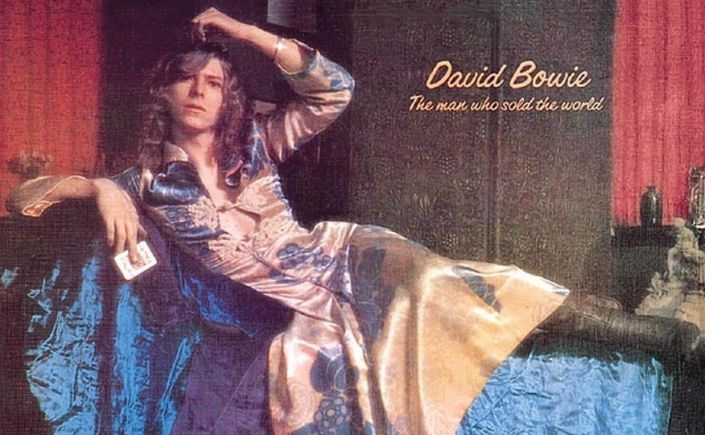
I was thinking about this this morning in the car on the way back from a lesson. I was listening to “The Man Who Sold the World” by David Bowie, and thinking about the fact that the cover version by Nirvana on MTV Unplugged is probably better known. So much so, that people might assume that it’s the original version. In this regards it’s similar to other songs such as “All Along the Watchtower” (Bob Dylan – 1967, The Jimi Hendrix Experience – 1968), and “Tainted Love” (Gloria Jones – 1964, Soft Cell – 1981).
This time though, I didn’t think too much about this. Instead, I was more concerned with that term – cover version. Continue reading

I’m generally not a fan of TV talent shows. I find that they tend to look for people who sing in an identical, overwrought style; and they can be quite exploitative of people who seem to have mental-health issues (The X-Factor particularly). Lately however, I’ve seen a few episodes of both the French and Walloon editions of The Voice. Continue reading
 English-Language Thoughts