Son of a Bitch

Yeah, I mean, I don’t want to get too political. Every Tom, Dick, and Harry’s got their hot take on Donald Trump, so I want to keep things focussed on language: grammar, etymology, stuff like that. Hang on, let me just have a quick look at Twitter before I write… He’s said what!?…

On Friday, Donald Trump, somehow President of the United States, weighed in on the controversial issue of professional American-football players protesting against racial injustice and police inequality towards African Americans. He naturally employed all the gravitas and diplomacy one would expect of his office, and said the following:

Continue reading

The Dotard Vs. Rocket Man

Dotard (n.) an elderly person suffering from senility or other mental infirmities

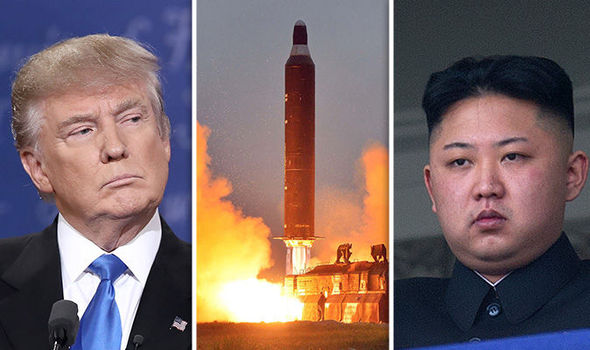
By now you’re probably well aware that a few days ago, Kim Jong Un called Donald Trump a dotard, in the long-running name-calling spat between the two obnoxious, hateful children, which could also lead to the deaths of millions.

Continue reading

Calling a Nazi a Nazi

Following the violence (from armed Nazis, and the one side they represent) in Charlottesville, some people have suggested that the perpetrators only acted like brutal, thuggish Nazis, because people had been calling them brutal, thuggish Nazis for so long. Of course they’re going to act like Nazis if you keep calling them Nazis! Obviously it’s an attempt to take the blame away from the actual Nazis committing the violence. It’s an attempt to say, Look, these are just troubled young men not happy with the way they’re country’s going. But they’ve been demonized by SJWs, and that’s made them lash out in frustration! What do you expect when you call someone a Nazi!

There a couple of assumptions being made here. The first is that if you label someone with a negative name often enough, they’ll become what you call them. And that seems logical enough. Imagine how angry it would make you to unfairly labelled as something as terrible as a Nazi!? Except, that only really works when the label is applied unfairly, doesn’t it? So let’s take a moment to have a look at some of the people being called Nazis:

Continue reading

Just How Bad is Donald Trump’s English? (Putting him to the Test)


It’s easy to say that Donald Trump has poor English. It’s easy to say that the level of English that he uses, in terms accuracy and tone, is far below the minimum expected of any public speaker. And of course the reason it’s so easy to say these things is that Donald Trump actually has really bad English. So inspired by a colleague’s idea, I’m going to test him, to see exactly what level of English he has. Specifically, I’m going to assess Trump’s spoken English using the assessment criteria of the spoken section of the IELTS exam.

Continue reading

Covfefe

By now you might be aware of Donald Trump’s latest addition to the English language: covfefe. If you haven’t heard yet, at 12:06am Washington time last night, the President of the United States tweeted:

Despite the negative press covfefe

…and that was it! Obviously he was deliberately tantalising us with this new word he’d coined, throwing it out into the world and waiting for us to figure out its meaning based on subtle clues he’s left, while he slept soundly. Here are some of my ideas:

Continue reading

Trump’s Triumph?

So Donald Trump is being hailed in some quarters as “presidential” for his address to Congress last night. And fair enough. Though there didn’t seem to be much substance to it, his tone was noticeably more measured than any of his public appearances to date. Not that that was particularly hard mind you. When you think about it though, describing his as presidential seems like something of a back-handed compliment, and at best damning him with faint praise. The word presidential means like or related to a president, so isn’t that the least that would be expected of him? Surely he should be presidential by default? But I understand people being pleasantly surprised. Regardless of whether you agree with his policies or not, it’s hard to deny that he’s had a very direct, blunt style, in contrast to his predecessors. Continue reading

“Boy, those Germans have a word for everything!” Part II

Sometimes you really appreciate the Germanness of English. I was thinking about this, naturally enough, after the resignation of the short-lived U.S National-Security Advisor Mike Flynn (yes it’s often written as National Security Advisor, but it’s logical to hyphenate it). While watching reports on Belgian TV, I noticed that the French for National-Security Advisor is conseiller à la sécurité nationale. Oof! 5 words instead of 2 (or 3, but National-Security can be considered as one, as it’s hyphenated), 13 syllables instead of 10. This doesn’t really give a true impression of the difference though, as French syllables are generally longer than English ones, as in English we have weak forms; short vowel sounds for unemphasized syllables. Think of how brief the io sound in national is, for example, and how many people almost skip it when speaking. Continue reading