Is Donald Trump the Humblest or the Most Humble Person in the World?

There may be one advantage to Donald Trump being President of the United States (only one!), though it’s quite a selfish one: he certainly gives me a lot of food for thought. Sometimes I really don’t want to write about him, or even think about him, or exist in the same universe as him, but he can be hard to ignore, particularly when he demonstrates his unusually dysfunctional relationship with the English language.

Last week he gave us another addition to the evergrowing list of did-he-actually-just-say-that? moments:
Continue reading

Some Thoughts on Subtitles

I’ve mentioned before how I prefer, while living in Belgium, to watch English-language films in English with French and Dutch subtitles, though that’s not always easily available.

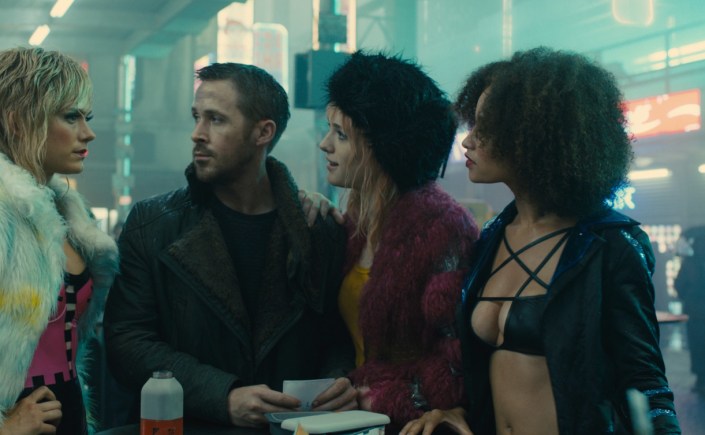
I also mentioned recently that I was going to see Blade Runner 2049 (which is good, but could never be as good as the first film). One of the advantages of watching films with subtitles is that it reveals interesting differences between the two or three languages involved, or gives you interesting translation choices to ponder.

Continue reading

Madame Pipi

Have you ever met Madame Pipi? You can find her, middle-aged to elderly, usually with glasses and cardigan, outside most public toilets in Belgium, sitting at a table, waiting for you to put your 35, 40, or 50c on her little plate. You might also occasionally cross her path in France, where she goes by Dame Pipi. Why is she there, and why does she want the money? Continue reading

Foreign Words in English: Are we Getting them Wrong? (Not Really, No)

I think it’s only fair, after looking at the way the French language uses pseudo-anglicisms (a lovely term I came across earlier), it’s only fair that I take a corresponding look at foreign words we use in English, and how their use is different from in their original language. Unsurprisingly, we use a lot of foreign terms, and with most English speakers being monolingual, we don’t always use them as they were originally intended.

Continue reading

Like Tears in Rain

I’ve seen things you people wouldn’t believe. Attack ships on fire off the shoulder of Orion. I watched C-beams glitter in the dark near the Tannhäuser Gate. All those moments will be lost in time, like tears in rain. Time to die.

-Roy Batty (Rutger Hauer), Blade Runner (1982)

I should state right away that this post has nothing to do with Blade Runner, either of the 2019 or 2049 variety (though I did rewatch the former last weekend in preparation for watching the latter, probably this afternoon). Continue reading

Who is The Last Jedi? Or is it, “Who are…”

You might have noticed that December will see the release of the latest Star Wars film, The Last Jedi. When the title was first announced, people immediately picked up on an ambiguity: is Jedi singular or plural?

Continue reading

Your Word of the Day: Kerning

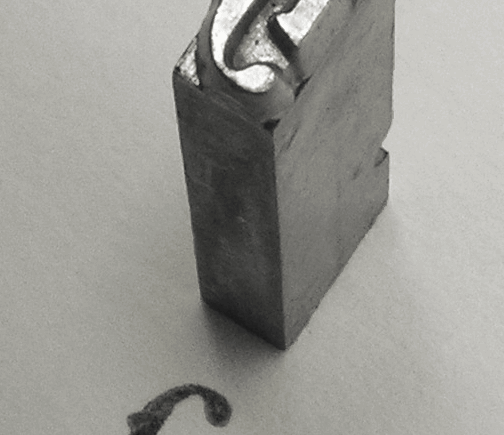
Kerning refers to the process of adjusting the space between letters in typesetting and graphic design.

The word originally comes from the French carne, meaning projecting angle or quill of a pen. In the days of manual typesetting, letters were placed on individual metal blocks known as glyphs. If a letter overlapped the following letter (e.g. a capital T before a capital A), the overlapping parts (the bars of the T), would protrude over the edge of the glyph, and these exposed parts of the letter were known as kerns.

You might not think kerning is important, especially because most digital text is automatically kerned for your pleasure. Here’s a nice example from Wikipedia of the benefits of kerning:

Continue reading