
I thought about this word recently, when writing about the story often shared about the origins of the word kangaroo. Obviously the word is now most associated with the native people of Australia. This hasn’t always been the case though.
Aboriginal

I thought about this word recently, when writing about the story often shared about the origins of the word kangaroo. Obviously the word is now most associated with the native people of Australia. This hasn’t always been the case though.


I think I use this expression a lot. I notice, as I’m writing, which phrases I tend to use more often than others. It’s not necessarily such a bad thing: we can’t use every word in the language, and our use of certain words and expressions is what gives us our own style.
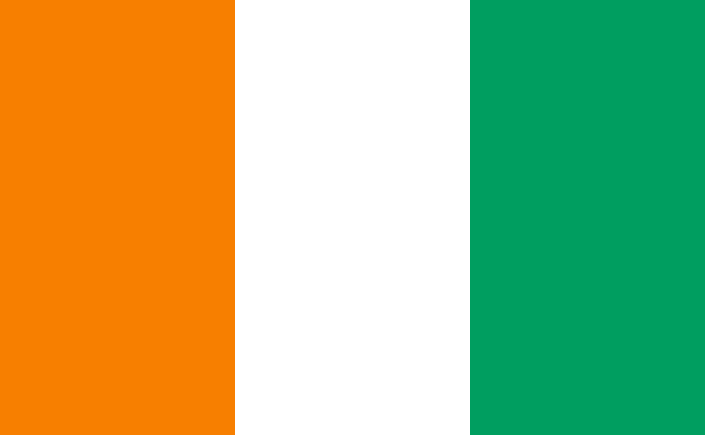
Looking at my statistics earlier, I saw that someone had visited this site today from Côte d’Ivoire (hi). Or, if you prefer, The Ivory Coast. Obviously Côte d’Ivoire is French, and The Ivory Coast is English, but you might have noticed that Côte d’Ivoire is often used in English as the name of the country, even though we usually translate names of countries into English. Why do we make an exception in the case of Côte d’Ivoire then?

A pretty straightforward question generally, but one with a surprisingly complex range of possible answers.

I had another of those putting-two-and-two-together moments today. I was trying to elicit the word second from a student. This was in the context of saying a date. This is often quite tricky for French speakers. In French you refer to a date as, for example, le vingt decembre (today’s date). If you were to literally translate this into English, it would be the twenty December, as opposed to the twentieth of December. French speakers often therefore take a while to get used to adding the the and of, and using the ordinal form of the number.

A duck is an aquatic animal, found in freshwater environments around the world.
I probably haven’t blown your mind by telling you that. Nor, I’m sure, will I do so by telling you that to duck is a verb meaning to quickly dip your head. I may, however, surprise you slightly by telling you which word came first.
 English-Language Thoughts