Reckless

A while back I wondered, considering one can be ruthlesscan one also therefore be ruthful. Toaday I considered a similar case: can you be reckful?

The answer is yes, but you’d sound quite old-fashioned. To reck is a now mainly obsolete word meaning to heed/pay attention to. It’s from the 16th century, and derived from the Old English reccan, meaning to take care of/heed of.

As to reck came to be used as a noun as well as a verb, the adjectives reckful and reckless logically followed. Reckful didn’t stand the test of time though, probably for two main reasons. I think it simply doesn’t sound as catchy as reckless. More importantly though, talking about someone being reckful generally isn’t as interesting as talking about someone reckless, so we’re naturally going to talk about the latter more.

So if you want to use the word reckful, you can, but consider that you can also use heedful, attentive, or other similar, more common words. But also consider: wouldn’t it be much more exciting to use reckless instead!?

One Little Mistake

I alway say that making mistakes is a vital part of learning a language,  to the point of tedium, I’m sure. Making mistakes is also, however, a key aspect of the formation of a language.

Continue reading

Maiden Name

You may never have thought much about this term. It probably seems fairly logical to you. It’s the name your mother had when she was a younger woman, before she was married, and maiden is an old word for a young woman, isn’t it? Yes, but as always, there’s a little more to it than that.

Continue reading

Mistletoe

It’s Christmas!

Well, I’m actually writing this on the 22nd (and doing some final edits on the 23rd), so I can have a few days off, but you know what I mean. I already covered lots of Christmassy topics last year, so if you’re interested in that, have a look. Today, I want to write a little bit about a simple but mysterious Christmas plant: mistletoe.

Continue reading

Mince Pies

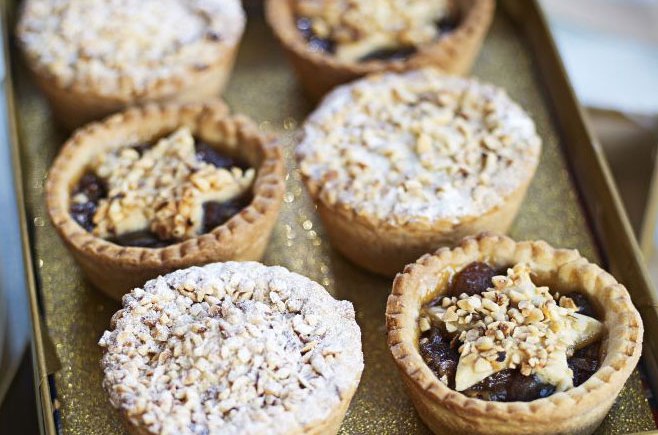
It’s Christmas Eve, and many of you, especially in the UK and Ireland, will be enjoying some mince pies today. If you’re unfamiliar with these delicious treats, they’re little sweet pies with a filling of dried fruit, jam, and spices. But no minced meat. What’s up with the name then?

Continue reading

Colon

While writing about military ranks last week, I wondered if the word colony, which I’d touched on briefly the week before, was related to the word column, from whose Italian translation the word colonel comes from.

My mind then thought of other words, like colony and colon: maybe they could be related too. Colony, maybe that comes from the Latin for column, columna, because it originally referred to a garrison town, where a column of soldiers were stationed. That sounds plausible, doesn’t it?

Continue reading

In One Fell Swoop

In a news article today about the new US tax bill, the writer said:

In one fell swoop, the Republicans have introduced some of the largest changes…

In one fell swoop is a pretty common phrase, perhaps almost to the point of cliché. But where does it come from, and what exactly does it mean?

Continue reading